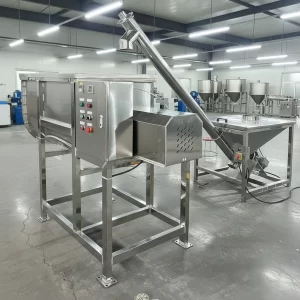
Against the backdrop of the rapid advancement of electric vehicles and energy storage systems, next-generation batteries—such as lithium-ion and sodium-ion types—are imposing increasingly stringent requirements on material uniformity, dispersibility, and stability. Consequently, the preparation of high-performance battery materials has emerged as a critical factor in determining overall battery performance. Among the myriad available solutions, the 3D mixer—an advanced blending device—has demonstrated exceptional advantages in this field, distinguished by its unique trajectory of motion and highly efficient mixing capabilities.
This device integrates innovative mechanical design with a novel mode of operation: by combining high-speed rotating choppers with a specially engineered mixing drum, it generates intense convective, shearing, and diffusive forces within the material. This mechanism effectively breaks down particle agglomerates, thereby achieving material uniformity at both the macroscopic and microscopic levels.
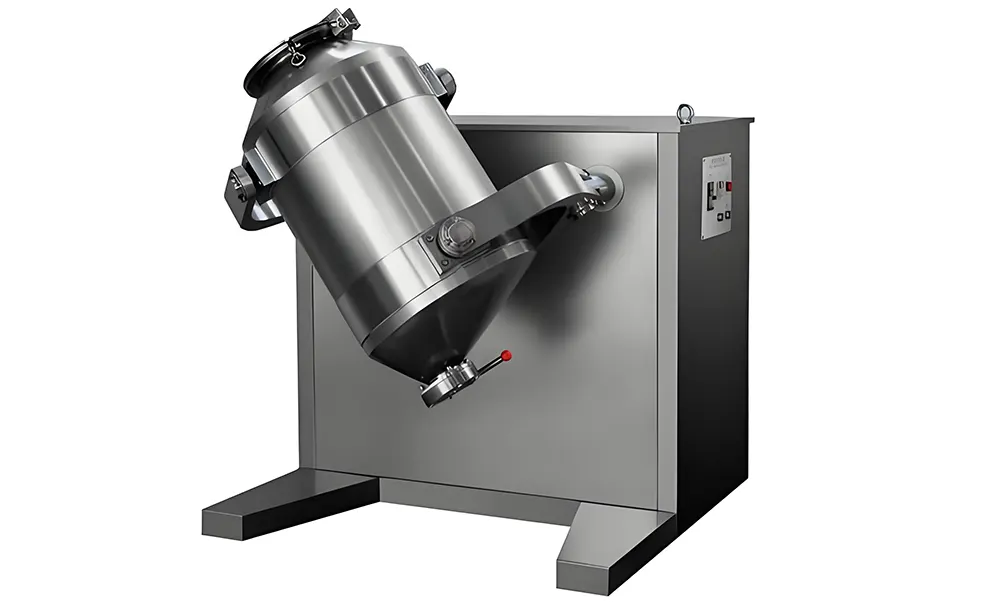
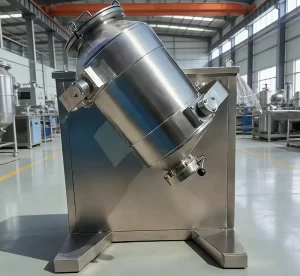
It is worth noting that the three-dimensional motion mixer is also highly suitable for battery material blending. Unlike conventional mixers, the three-dimensional motion mixer creates a complex, multi-axis tumbling action that subjects material particles to continuous and gentle yet thorough mixing. This minimizes mechanical stress and heat buildup while ensuring exceptional homogeneity—an ideal feature for heat-sensitive or delicate battery materials such as electrode coatings and solid-state electrolytes.
Key advantages of 3D mixers for battery materials:
High Efficiency – Rapid and effective dispersion prevents material caking and enables fast, uniform blending.
Intelligent Control System – Equipped with smart controls, the mixer allows precise parameter setting and real‑time monitoring, ensuring intelligent process management, improved mixing accuracy and consistency, and optimized mixing speed and outcome.
High-Quality Materials & Advanced Design – Constructed with superior materials and cutting‑edge design, the mixer offers enhanced stability, robustness, and durability, further boosting mixing efficiency and speed.
With its outstanding mixing performance, low contamination characteristics, and high operational stability, the high-speed mixer has become indispensable in the production of new‑energy batteries. Looking ahead, continuous innovation and evolving market needs will drive further improvements in performance and application scope.
The ongoing trends toward intelligence and automation will make high-speed mixing equipment even more efficient and smart, fully accommodating the ever‑changing production requirements of diverse industries. Meanwhile, the three‑dimensional motion mixer, with its gentle yet thorough mixing action, offers an excellent alternative for applications where low‑stress, high‑uniformity blending of advanced battery materials is required.
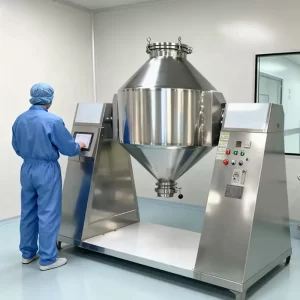
Double cone mixer efficiently solves trace element mixing challenges in food powder processing. Ensures uniform blending of diverse ingredients, improves production efficiency, and meets high-quality standards for functional foods and premixes.
Prevents metal powder segregation and particle damage. The three-dimensional motion mixer can uniformly mix metal powder within 10-20 minutes with virtually no contamination.
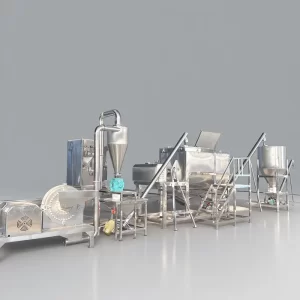
Explore industrial mixing solutions for flour processing. From ribbon and plough shear mixers to complete production lines, achieve consistent blending, accurate weighing, and sanitary operation for bakery and food applications.
 Powder Mixer