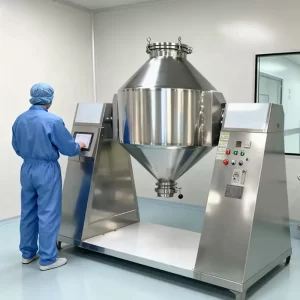
Food-Grade Stainless Steel Mixers: Ensuring Quality and Safety in Food Production
With the rapid growth of the food industry, every step of production directly affects product quality and safety. Among the critical equipment used, food-grade stainless steel mixers play an indispensable role. From daily bread and pastries to various sauces and nutritional drinks, the consistent quality and unique taste of these foods rely heavily on the uniform mixing provided by high-quality mixing equipment.
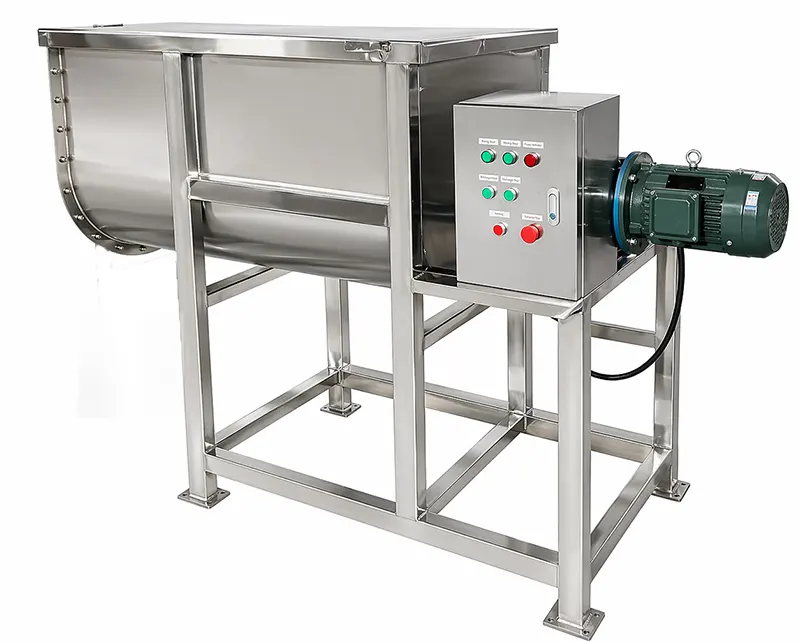
The standout feature of these mixers is their construction from 304 or 316 food-grade stainless steel. Food processing often involves contact with acidic or alkaline substances and humid environments. Ordinary materials are prone to corrosion and rust, which not only damages equipment but also poses a serious risk of contaminating the food and endangering consumer health. In contrast, food-grade stainless steel mixers resist such corrosion, ensuring long-term operation while preventing contamination during the mixing process, thereby strictly maintaining food safety.
In terms of structural design, these mixers reflect a high level of scientific and user-centered engineering. To meet the stringent cleaning requirements of the food and pharmaceutical industries, we have developed a large-opening design. The mixing barrel can be fully opened at its maximum diameter, allowing thorough cleaning of both the interior and the mixing blades.
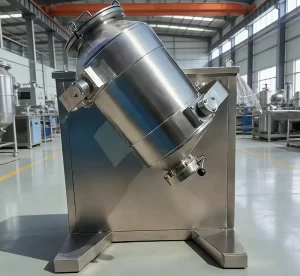
The technology behind food-grade stainless steel mixers continues to evolve. Through a combination of two motion modes – rotation of the mixing barrel and the stirring action of full-size internal blades – the material inside the barrel undergoes chaotic tumbling and mixing. The internal forced-action blades promote convection, interweaving, and shearing between different components within the powder or bulk material. This process effectively blends various ingredients until a uniform mixture is achieved.
With their inherent advantages, food-grade stainless steel mixers play a vital role in food production. Looking ahead, driven by technological innovation and changing market demands, they will continue to advance toward greater intelligence, higher efficiency, and lower energy consumption. This progress will further propel the food industry forward, bringing consumers more high-quality food products.
 Powder Mixer